Build & Decor
Place outdoor habitats, shape your indoor lodge office, and unlock new pens through town quests—so guests have space before they check in.
Two Zones, One Resort
Building in Pawsome Resort is not just decoration—it unlocks which species you can host. Steam lists indoor office space and outdoor animal habitats as separate build tracks. The public demo confirms you buy pen blueprints from the lumberjack, place them freely inside your habitat zone, and expand further after Rudgar turn-ins.
Below is a quick-start checklist, a habitat cost snapshot, and placement tips from the public Steam demo. Guest care basics sit in Animals; who sells blueprints is on Village; crops and crafting feed into Farming.
Decor and furniture catalogs will grow throughout Early Access—this page focuses on what actually blocks progress in the demo: habitats, materials, and smart placement.
Quick Start: First Builds
Follow this order from the public Steam demo. Costs may shift in Early Access—the logic stays: first pen → daily care loop → more species → automation helper. Build for chores before beauty: only unlock habitats you can feed, water, and clean inside one walking loop.
Finish the resort tutorial. Learn how placement mode works before you leave the lodge—skipping tool tips makes the first habitat harder than it needs to be.
Buy the first sheep habitat from the lumberjack; ring the bell if needed. Compare its current cost with your stock and leave money for feed. Village
Place it anywhere inside your habitat zone. The demo does not lock pens to fixed tiles—leave walking room for feeding, watering, sweeping, and pickup checks.
Stock food and water near the pen. Buy farmer's mix at the town shop before your first guest checks in. Horses and alpacas drain water cans fast later on.
Bring 50 Wood and 20 Stone to Rudgar for the habitat expansion quest. Then check which blueprints the first shop page now offers.
Chop trees beside habitats for wood. Trees regrow over time—budget daylight for lumber before expensive pens. See Farming for the gather loop.
After the day-two newspaper, follow Rudgar’s Something’s Not Right quest to rescue the helper; keep its feed storage stocked.
Decorate the lodge after function works. Put earnings into feeding and cleaning tools first; do not reserve early space for roadmap-only animals or Q4 features until Patch Notes make them playable.
Outdoor Habitat Pens
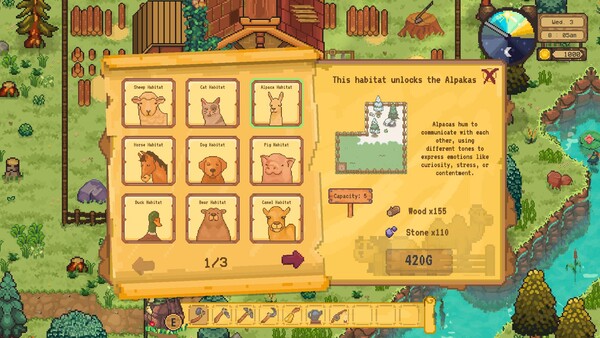
Species unlock through blueprint purchases—each pen is its own build project with wood, stone, and gold costs.
Sheep
Demo first buy
Cat · Dog · Pig
Starter grid
Alpaca · Horse
After Rudgar
Duck · Bear
Later unlocks
Camel
Higher-tier pen
25+ species EA
More pens incoming
Steam store screenshots show a habitat picker with sheep through camel icons. Exact unlock order beyond the demo is still expanding—watch quest markers and lumberjack/Rudgar dialogue for new blueprints.
Indoor Lodge Office
Register guests, open menus, craft at the house workbench, and check the pickup notebook—all from your growing indoor office.
- Guest registration & notebook
- Workbench crafting (farmer's mix)
- Furniture as quests allow
Materials You Need
Wood
Chop trees near habitats; lumberjack sells blueprints
Stone
Gather for pens and Rudgar turn-ins
Gold
Guest stays and quests fund bigger pens
Habitat Helper Unlock
Rudgar starts the rescue after the day-two newspaper. From the lumberjack, travel west twice, then north to the witch’s house; interact with the cage from its side.
See quest steps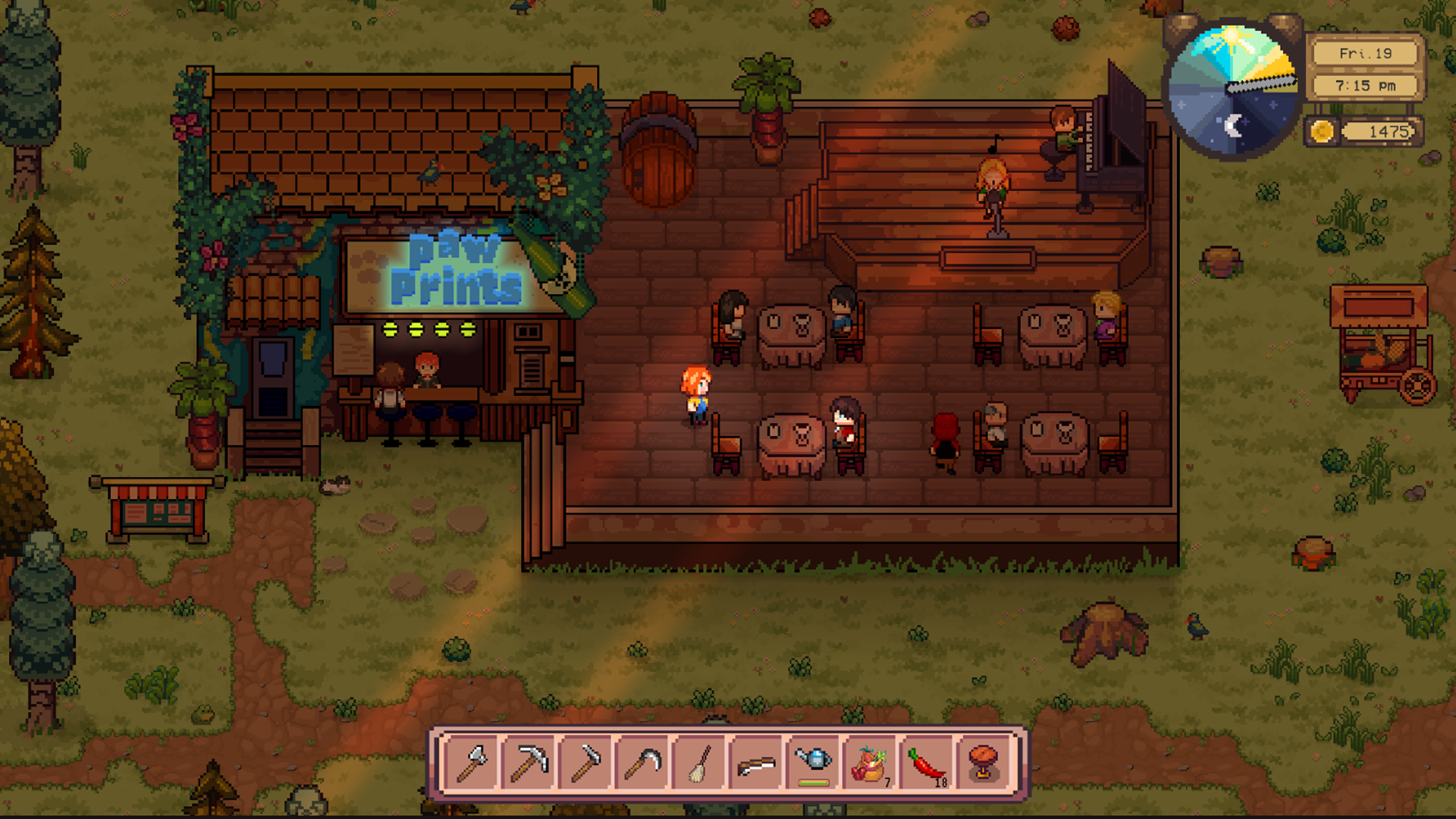
Habitat Materials & Unlocks
Check each blueprint’s current material and cash price. Rudgar’s 50 Wood + 20 Stone unlock is separate from buying the next habitat.
| Habitat | How to unlock | Budget check |
|---|---|---|
| Sheep pen | Lumberjack shop (ring bell) | Check blueprint cost; reserve the first Farmer’s Mix purchase too. |
| First habitat shop page | Rudgar quest → material turn-in | 50 wood + 20 stone (unlock fee) |
| Cat pen | Lumberjack shop (after sheep pen) | Buy only after its blueprint is available and today’s feed is covered. |
| Alpaca pen | After blueprint unlocked | Compare blueprint materials with stock left after Rudgar’s turn-in. |
| Horse pen | After blueprint unlocked | Check both construction cost and clear placement space before buying. |
| Higher-tier pens | Progress quests & income | Scales up—save wood before impulse buys |
Placement Tips
Free placement in habitat zone
You can rotate and place pens anywhere inside the habitat area—leave gaps for paths between food stations and pens.
Food before furniture
Buy feeding and cleaning supplies before cosmetic decor. A pretty lodge with empty bowls still loses guest stars.
Build before booking
Place or upgrade the right outdoor pen before you accept a new species. Large guests like horses need space ready on check-in day.
Short walking loops
Group office, fields, habitats, and well on one path. The map is wide—every extra minute walking is a missed feeding round.
Chop near your pens
Trees beside habitats supply wood for the next blueprint. They regrow—plan a daily chop pass instead of one long trek.
Expand when stable
Add a second pen only when feeding, cleaning, and check-outs feel routine. Two unfinished pens plus town quests is an easy way to lose stars.
What Your Resort Can Look Like
You start with one sheep pen and a short walk to town—that is fine. These in-game shots show what good placement gets you later: faster feeding rounds, space for new species, and a lodge layout that does not fight your daily routine.
Connect pens with paths
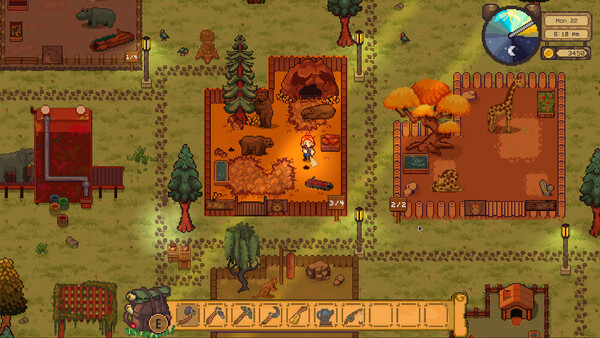
Link your outdoor pens with stone paths, but do not pack them tight. You will walk this route every day to feed and clean—a little space between pens saves real minutes.
Outdoor pens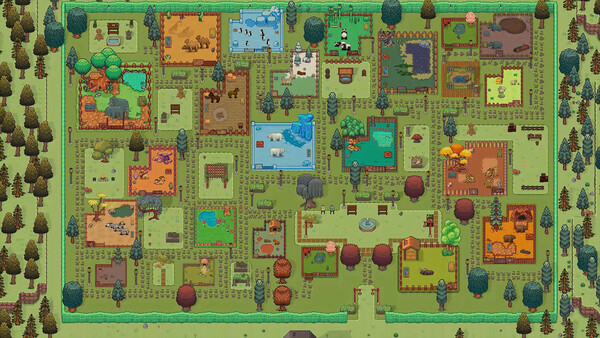
The habitat zone endgame
This bird's-eye view is the long-term dream—many species, many pens. You do not need this on day one. Grab the sheep pen from the lumberjack, then Rudgar's unlock, and grow step by step.
Late-game layout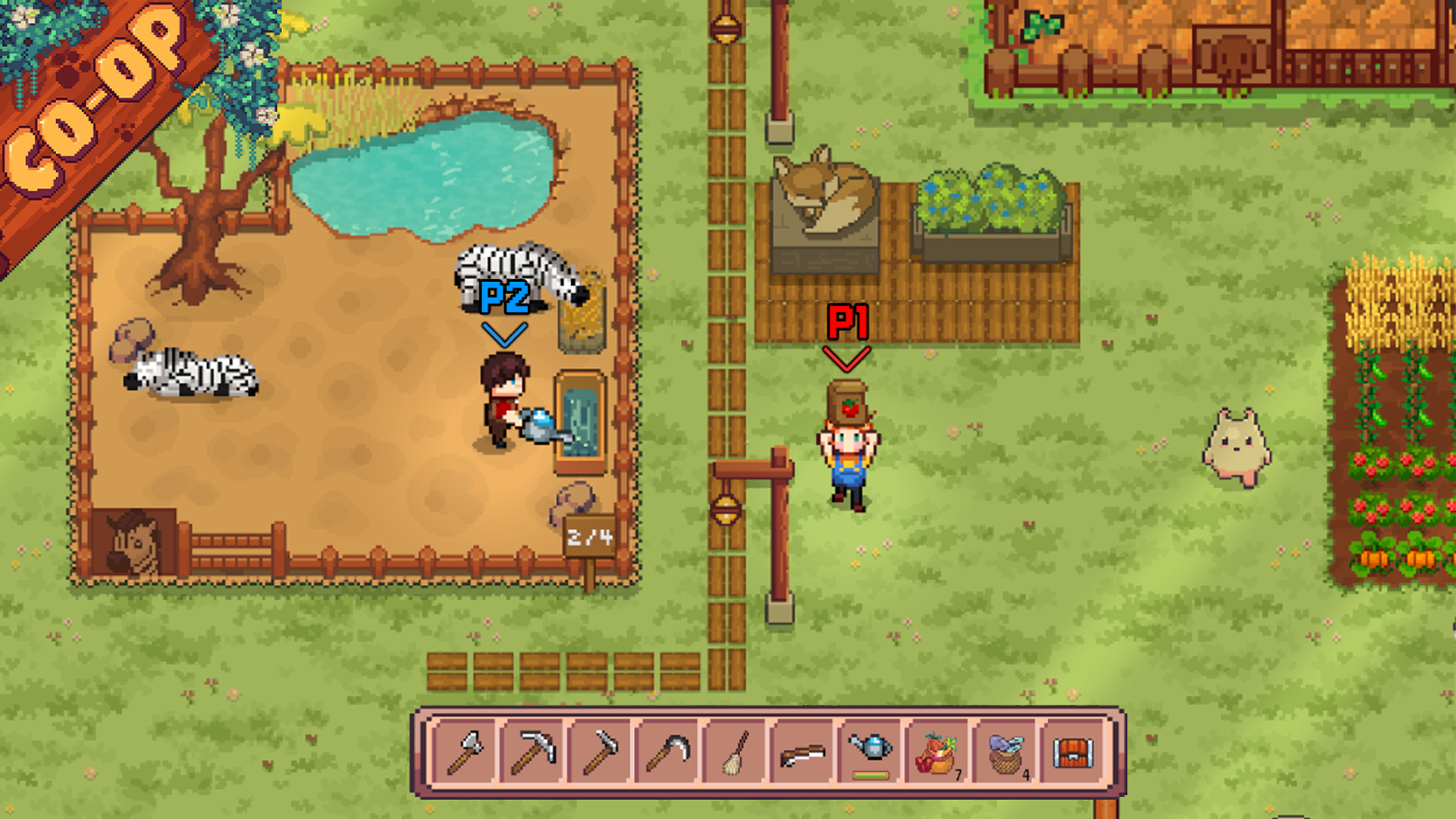
Stock the pen before check-in
Put hay, water, and food bowls inside the fence before your guest arrives. Hunting for supplies after check-in is an easy way to lose stars.
First guest tip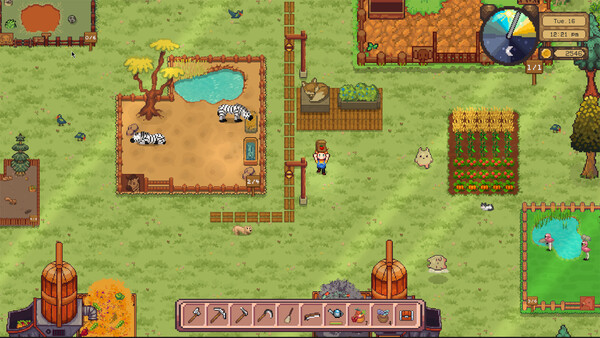
One loop for your whole day
Keep your lodge, crop field, and outdoor pens on one short walk. Set up this route before you host a third species—you will thank yourself at feeding time.
Daily routeBefore your next errand
Use these checks to choose your next action without neglecting today’s guests.
Preview the habitat before buying: compare its footprint with clear ground, and leave a gate-to-bowl path.
Budget for the habitat and its first feed refill together. A blueprint alone does not make another guest manageable.
If placement fails, check clear ground and the habitat boundary before buying another blueprint. A camera drifting up-left is a different problem reported in September and October; no reliable fix is established here. Do not buy extra blueprints as a cure: report the version and reproduction steps to the developer.
After the first pen works
Once your first pen is placed, spend an afternoon in the Village Guide learning lumberjack and Rudgar turn-ins—those blueprints gate more species than any sofa purchase. Pair that with the Farming Guide so wood chopping and crop rows happen on the same scooter loop, and keep Animals open for pen-size reminders before you craft expensive habitats.
More about the game: View on Steam · Pixel Puffs Studio · Steam Community